
Retainer-KPIs Framework
- all
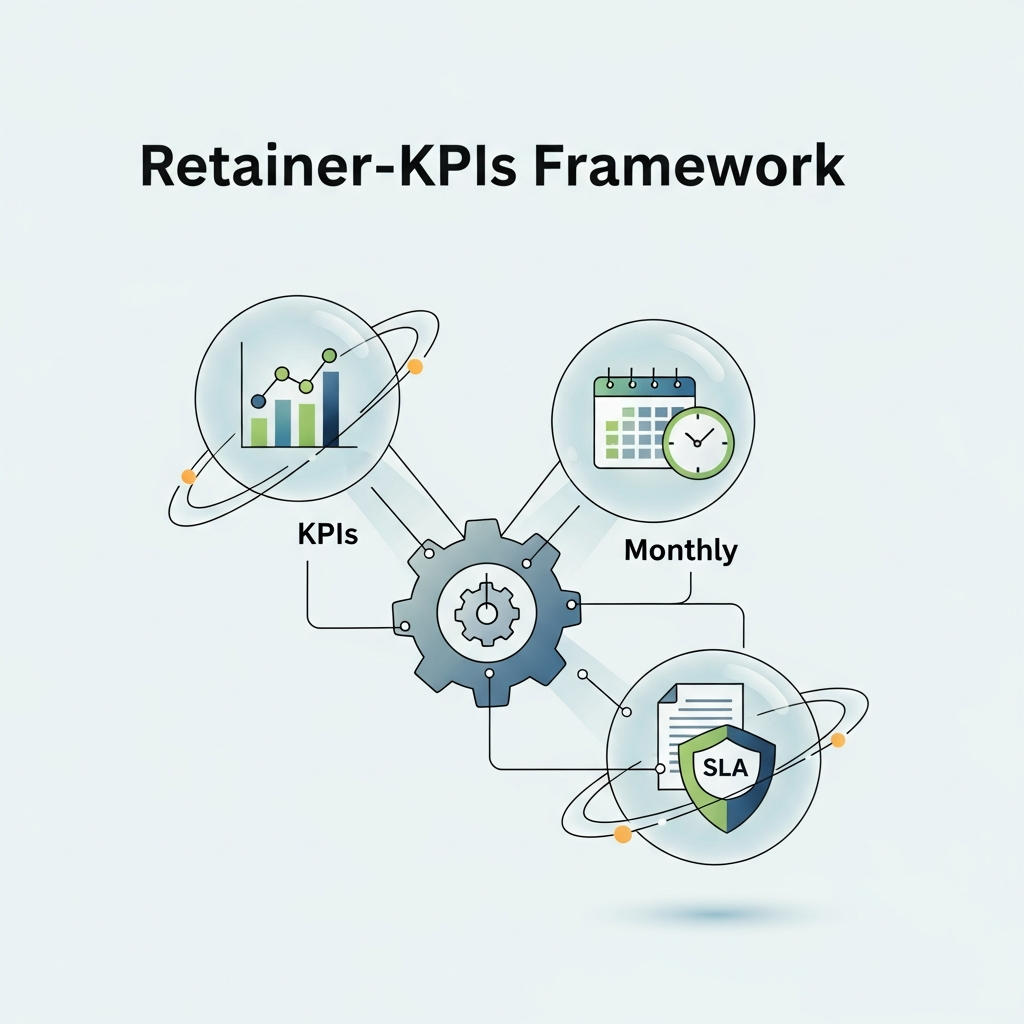
Retainer-KPIs Framework
1. Why a Retainer KPI Framework matters
In today’s procurement and product environments, development retainers are the backbone of sustained delivery. A KPI-driven framework helps align vendor outcomes with business goals, reduce ambiguity, and create a transparent path to value. It also mitigates risk by formalizing expectations around delivery, quality, and cost over time.
For technology leaders evaluating retained engagements, KPIs act as a shared language. They translate vague desires like faster delivery or better quality into measurable targets. The result is better governance, clearer decision rights, and improved ROI over the life of the contract.
As you design a retainer framework, start with your business goals, the expected cadence of work, and the key value streams that the vendor enables. A well-constructed KPI set supports both routine performance checks and strategic portfolio reviews. It also provides a defensible basis for renewal, expansion, or difficult conversations when outcomes diverge from plan.
2. Core KPI categories for retainers
Effective KPI sets cover multiple dimensions of a retained engagement. At a minimum, you should track delivery, quality, cost efficiency, and governance. Each category should have a small number of practical, verifiable metrics that can be reported monthly.
2.1 Delivery velocity and predictability
Delivery velocity measures how rapidly the vendor completes work with consistent quality. Common metrics include sprint velocity, feature lead time, and the percentage of commitments met in each cycle. Predictability comes from stable planning, accurate forecasting, and minimal scope creep.
Best practice: pair velocity with a backlog health indicator. Monitor story aging, unfinished work, and the rate of new work entering the backlog. This helps executives gauge whether the team is overloaded or underutilized and adjust the retainer accordingly.
2.2 Quality and defect management
Quality metrics quantify how well the delivered software meets requirements. Key indicators include defect density, escaped defects, defect resolution time, and test coverage. A healthy program maintains low defect leakage into production while maintaining test rigour.
Best practice: integrate quality into the definition of done and tie it to continuous integration and automated testing. Regularly review defect trends by severity and validate whether fixes align with user impact.
2.3 Cost and value optimization
Cost metrics help ensure the retainer delivers ongoing value. Track actual billable hours versus allocated hours, cost per feature, and cost variance against plan. Value-focused metrics translate delivery into business impact, such as time-to-market improvements or reduced manual effort.
Best practice: pair cost metrics with value metrics like time saved, revenue impact, or customer satisfaction improvements. This makes ROI assessment tangible for leadership and investors.
2.4 Governance and collaboration
Governance includes how decisions are made, who approves scope changes, and how risk is managed. Collaboration metrics track stakeholder engagement, cadence adherence, and clarity of ownership. Strong governance reduces renegotiation and accelerates decisioning when priorities shift.
Best practice: establish a formal RACI (Responsible-Accountable-Consulted-Informed) for core processes. And create a quarterly governance review to ensure alignment with evolving business priorities.
3. SLA metrics that govern retainers
Service level agreements define the minimum acceptable performance of the vendor. Well-crafted SLAs balance customer expectations with realistic delivery capabilities. They should be measurable, enforceable, and easy to report on a monthly basis.
3.1 Response times and acknowledgment
Response time measures how quickly the vendor acknowledges new requests or incidents. Typical targets include initial acknowledgment within 30 minutes for critical issues and 4 hours for high priority items. Clear definitions prevent misinterpretation during events with high impact.
3.2 Resolution and recovery times
Resolution time tracks how fast issues are resolved. Set tiered targets by severity and ensure escalation paths are documented. For ongoing work, include a target for delivering agreed-upon changes within a standard sprint cycle.
3.3 Availability and uptime
Availability targets are essential for production systems and customer-facing apps. Define acceptable downtime windows, maintenance schedules, and vulnerability windows. Include penalties or credits only when service levels are consistently missed and clearly defined in the contract.
3.4 Change control and scope management
Change control governs how scope changes are requested, approved, and priced. SLA-friendly changes reduce surprises by formalizing impact analyses, priority, and timelines. A transparent process supports smoother delivery during business-led pivots.
4. Reporting templates you can reuse
Templates provide a consistent, repeatable way to track performance. A well-designed report communicates status clearly to stakeholders and supports decision-making. Use a combination of dashboards and narrative summaries to convey both data and context.
4.1 Monthly KPI dashboard
A compact dashboard should show velocity, quality, uptime, and cost against plan. Include trend lines, confidence intervals, and flags for anomalies. Keep it scannable so executives can grasp performance in minutes.
4.2 SLA scorecard
The SLA scorecard translates response, resolution, and availability metrics into a single rating. Use color-coded bands to indicate performance against targets. Attach a brief commentary explaining deviations and corrective actions.
4.3 ROI impact report
ROI reporting connects delivered value to the contract costs. Quantify outcomes like reduced manual effort, faster feature delivery, or increased user adoption. Include a sensitivity analysis showing how changes in scope or team size affect ROI.
5. Designing a monthly retainer model
A monthly retainer model should balance predictable costs with flexible capacity. Start with a baseline allocation of hours and a mechanism for additional hours when demand spikes. Clear pricing and governance help prevent disputes and misaligned expectations.
5.1 Fixed vs flexible retainer concepts
Fixed retainers provide stability but can underutilize capacity during slow periods. Flexible retainers allow adjustments to scope or hours based on demand, reducing waste. A hybrid approach often works best for product teams facing variable workloads.
5.2 Capacity planning and forecasting
Forecasting should consider sprint velocity, backlog health, and upcoming initiatives. Use rolling 6- to 12-week forecasts to adapt capacity. Build in contingency for critical defects or urgent roadmap items.
5.3 Risk sharing and incentives
Align incentives with outcomes rather than activity. Tie performance bonuses or credits to measurable milestones, like release cadence or defect reduction. This encourages continuous improvement while maintaining project focus.
6. ROI measurement for vendor partnerships
ROI for retainers is about more than billable hours. It combines delivered value, risk reduction, and strategic enablement. A clear ROI framework helps investors and executives understand the financial impact of ongoing partnerships.
6.1 Value mapping
Start with a value map that ties vendor activities to business outcomes. For example, automating a 50-person manual process saves headcount costs and improves processing speed. Map each KPI to a direct financial or strategic benefit.
6.2 ROI calculation examples
A simple approach is to compute ROI as (net value delivered – contract cost) / contract cost. Net value includes efficiency gains, revenue impact, and risk reductions. Use sensitivity analyses to show how ROI shifts with different engagement levels.
6.3 Non-financial ROI
Not all benefits are monetary. Consider improvements in time-to-market, customer experience, and strategic flexibility. Document these as qualitative ROI to provide a fuller picture of value.
7. Governance and risk management
Robust governance reduces friction and improves accountability. Establish clear escalation paths, escalation timers, and risk registers. Governance should be lightweight enough to scale with the organization yet rigorous enough to handle complexity.
7.1 Escalation paths
Document who handles what, when to escalate, and how decisions are approved. Prefer a staged escalation that moves from product owners to program leads to executive sponsors as needed. This structure prevents delays and aligns stakeholders.
7.2 Change control and risk registers
Use formal change requests to log scope shifts, estimated impact, and approval status. Maintain a living risk register with ownership, likelihood, impact, and mitigation actions. Review both weekly and monthly to keep risk posture aligned with reality.
7.3 Compliance and security
Embed security and regulatory controls into every engagement phase. Align with policy frameworks relevant to your industry, such as data privacy rules or software development lifecycle standards. Regular audits and mock drills help sustain trust over time.
8. Implementation playbook: from discovery to scale
Turn the framework into action with a practical, phased plan. Start with discovery to map business goals, stakeholders, and initial KPIs. Then design templates, pilot in a controlled scope, and scale once the process proves itself.
8.1 Kickoff and discovery
Kickoff should align product managers, finance, and vendors on the KPI framework. Create a shared terminology glossary and a baseline KPI scorecard. Document expectations for data sources and reporting cadence.
8.2 Pilot and refinement
Run a 4–8 week pilot with a subset of projects. Gather feedback on data quality, report readability, and decision utility. Refine KPI definitions, data collection methods, and SLAs based on pilot learnings.
8.3 Scale and institutionalize
Roll the framework across the broader retainer. Standardize templates, automate data collection where possible, and embed governance into procurement and vendor management processes. Monitor continuously and adjust targets as business priorities evolve.
9. Common pitfalls and best practices
Avoid vague targets and unclear data sources. Ensure every KPI has a data owner and a clear calculation method. Vague metrics invite ambiguity and disputes during quarterly reviews.
Keep the KPI set lean. Too many metrics dilute focus and complicate reporting. Start with a core set of 6–10 metrics and expand only when you derive demonstrable value.
Balance leading indicators with meaningful lagging outcomes. Leading metrics forecast performance, while lagging metrics confirm success. Use both to create a robust performance picture.
10. Next steps
Begin by selecting a cross-functional sponsor team and identifying the top business outcomes you want to influence. Draft your initial KPI definitions, SLAs, and reporting templates. Schedule a 90-day review cycle to validate progress and refine targets.
Consider pairing this framework with a standard vendor evaluation template to ensure consistent governance across multiple retainers. As you mature, automate data collection and reporting to reduce manual work and improve reliability. The goal is to establish a scalable, measurable path to sustained vendor value.
When you’re ready, share these foundations with procurement, legal, and technology leadership to align on terms and expectations. A disciplined, KPI-driven retainer program can accelerate delivery velocity, improve quality, and maximize theROI of ongoing vendor partnerships.