
Compliance-First Architecture for Fintech Startups
- all
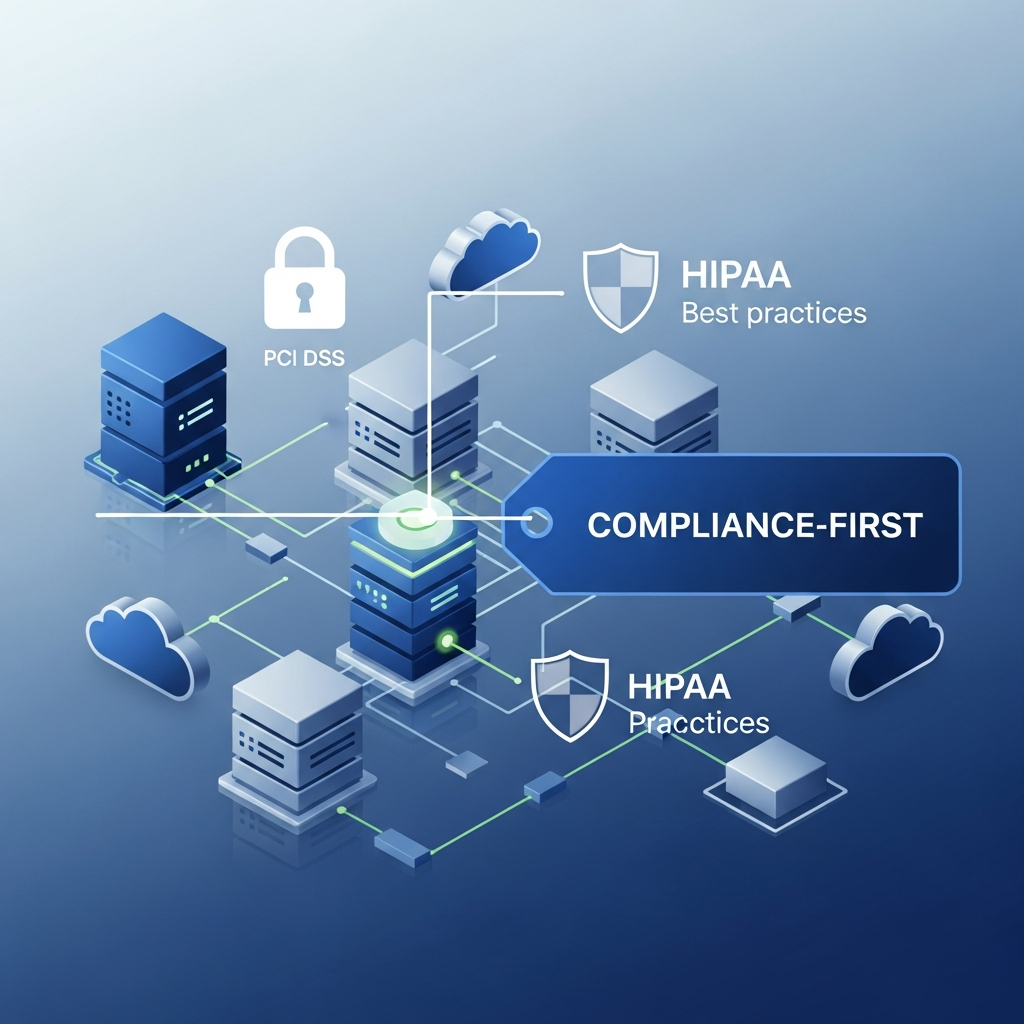
Compliance-First Architecture for Fintech Startups
Table of Contents
Why Compliance-First Architecture Matters for Fintech
Fintech products handle highly sensitive financial data, payments, and sometimes health-related information. A compliance-first approach reduces risk, speeds up audits, and creates a reliable foundation for product velocity. When security and regulatory considerations are baked into the design from day one, teams avoid costly rework late in the lifecycle.
A compliant architecture is not a bottleneck; it is a strategic enabler. It clarifies data ownership, access controls, and responsibilities across teams and vendors. It also makes it easier to demonstrate compliance to regulators, investors, and customers—an essential advantage in regulated markets.
In practice, a compliance-first mindset translates into four core capabilities: secure data flow across systems, auditable decision trails, resilient identities and access controls, and architecture patterns that support ongoing certification and re-certification efforts.
- Clear data boundaries and segmentation reduce blast radii in case of incidents.
- Automated auditing and immutable logs simplify investigations and regulatory reporting.
- Strong cryptographic protections preserve data integrity and confidentiality.
- Well-defined API contracts and governance enable safe integrations with partners and banks.
Regulatory Landscape: PCI DSS and HIPAA
Fintech platforms that process cardholder data must align to PCI DSS patterns. PCI DSS outlines requirements for protecting cardholder data, maintaining secure networks, and implementing robust access controls and monitoring. Even when you outsource or use third-party services, responsibility for protecting data remains shared, and a compliant architecture should reflect that shared responsibility model.
While HIPAA is typically associated with health information, there are fintech contexts—such as healthcare payments and care-management ecosystems—where PHI and ePHI protections come into play. HIPAA cloud deployment best practices emphasize secure cloud design, strict access controls, encryption, and auditable activity around PHI handling. Fintech startups in regulated domains should plan for both PCI DSS and HIPAA considerations when cross-industry data intertwines with payments, invoicing, or patient data exchange.
PCI DSS architecture patterns
Key patterns include network segmentation, tokenization of payment data, and strict compartmentalization of environments (development, testing, staging, production). A common pattern is to isolate PCI data to a dedicated vault or service, with non-PCI components operating on tokenized identifiers. Regular log aggregation, anomaly detection, and access auditing help meet monitoring and reporting requirements.
HIPAA cloud deployment best practices
For healthcare-adjacent fintech use cases, ensure data at rest is encrypted with strong key management, deploy strict role-based access controls, and maintain detailed audit trails for PHI access. Data minimization, consent management, and secure data deletion practices should be baked into the deployment pipeline and lifecycle management.
Architectural Patterns for Compliance
Architecture choices shape how you implement controls without sacrificing velocity. The following patterns balance security with delivery speed:
- Zero-trust with microsegmentation: Treat every access attempt as untrusted until proven legitimate. Segment data domains so that a breach in one segment cannot reach others.
- API-first, contract-driven: Define explicit contracts, schemas, and security requirements for every integration. Use API gateways to enforce authentication, authorization, and rate limiting at the edge.
- Tokenization-first data path: Replace sensitive data with tokens in internal flows and use secure vaults for decrypting only when necessary.
- Immutable event sourcing for critical actions: Persist state changes as append-only events to enable audit trails and deterministic replay during investigations.
- Separation of duties by design: Enforce minimum privilege across roles, with workflows that prevent escalation without proper approvals.
These patterns work best when integrated with a governance model that includes architecture review boards, security champions, and ongoing threat modeling. The goal is to establish repeatable, auditable patterns rather than ad-hoc fixes after incidents occur.
Layered security model
A practical layered model includes three concentric layers: perimeter security (network, firewall, and WAF), application security (code reviews, secure API design, and input validation), and data security (encryption, tokenization, and key management). When designed in concert, these layers reduce the probability and impact of breaches.
Data Protection: Encryption and Tokenization
Data encryption at rest and in transit is foundational. Use AES-256 or equivalent modern algorithms for stored data and TLS 1.2+ for data in transit. In fintech, data often travels through multiple services; encryption should follow data-in-motion and data-at-rest protections across all microservices and data stores.
Tokenization replaces sensitive identifiers with non-sensitive equivalents that can be safely stored or logged. A tokenization layer should be independent from business logic to prevent accidental leakage of raw data through application logs or dashboards. Key management is critical: use a dedicated KMS or HSM, enforce rotation policies, and separate keys by data domain and environment.
Data masking, field-level encryption, and pseudonymization further reduce exposure. Combine these techniques with robust data retention and secure deletion policies to comply with regulatory requirements while maintaining useful analytics capabilities.
Practical tips
- Audit all cryptographic operations with immutable logs to support forensic investigations.
- Establish clear data ownership maps and data lineage diagrams for regulators and auditors.
- Automate key rotation and access control policies to minimize human error.
Identity, Access, and Auditability
Identity and access management (IAM) is the gatekeeper of a compliant fintech architecture. Implement multi-factor authentication (MFA), strong password policies, and least- privilege access across all environments. Privileged access management (PAM) should be automated, with approvals required for elevated permissions and full activity logging.
Auditability means every sensitive action leaves a trace. Implement immutable logs for authentication events, data access, configuration changes, and API usage. Consider using a tamper-evident logging mechanism and append-only storage to ensure trails cannot be retroactively altered.
Design for visibility by default. Create dashboards that summarize who accessed what, when, and from where. This makes regulatory reporting more straightforward and helps identify suspicious activity quickly.
Identity design patterns
- Federated identity with SSO for partner integrations
- Role-based access control (RBAC) with time-bound privileges
- Adaptive authentication to balance security and user experience
Secure API Design
APIs are the connective tissue of fintech platforms. Secure API design includes strong authentication (OAuth 2.0 or mTLS where appropriate), granular authorization, and strict input validation. API gateways should enforce policy, rate limiting, IP whitelisting, anomaly detection, and centralized logging.
Use contract-driven API development with explicit versioning and backward compatibility. Implement data minimization at the API layer and ensure sensitive fields are encrypted or tokenized before transmission. Regular third-party security assessments and automated API security testing reduce the risk of vulnerabilities slipping into production.
Best practices in API security
- Prefer OAuth 2.0 with short-lived access tokens and refresh tokens with rotation.
- Use mutual TLS for service-to-service communication in high-risk environments.
- Apply rate limiting and anomaly detection to protect from abuse and bot traffic.
Cloud Deployment Best Practices for Regulatory Readiness
Cloud architectures offer scalability and rapid iteration, but regulatory readiness requires disciplined configurations. Implement a shared responsibility model where security and compliance responsibilities are clearly mapped between the fintech organization and cloud providers. Use encrypted storage, controlled network segmentation, and robust monitoring to sustain compliance in dynamic cloud environments.
Leverage managed services with certified controls (for example, compliant database services, identity services, and encryption key management). Maintain pipeline security by integrating automated security checks into CI/CD, including dependency scanning, static application security testing (SAST), and dynamic testing (DAST) prior to production deployments.
Document data residency and data sovereignty requirements, and implement region-based data segmentation where needed. Regularly review cloud configurations against compliance checklists and conduct periodic tabletop exercises for incident response.
DevOps, Testing, and Threat Modeling
Compliance should be baked into the development lifecycle. A threat modeling process at the design phase helps identify risks early and guides architectural decisions. Pair threat modeling with a secure SDLC that emphasizes automated checks, secret management, and secure coding practices.
Adopt CI/CD pipelines that integrate security tests, compliance verifications, and approval gates. Require automated policy enforcement before deployments to production. Establish incident response playbooks, runbooks, and regular drills to ensure readiness for real incidents.
12-week threat model framework
- Map data flows and trust zones across the architecture.
- Identify high-risk assets and threat scenarios.
- Define mitigations and verification tests for each risk.
- Integrate mitigations into design and code reviews.
Vendor Risk and Compliance Partnerships
Fintech ecosystems rely on external services—payment processors, identity providers, cloud services, and analytics platforms. Conduct vendor risk assessments that cover data protection, access controls, incident response, and regulatory certifications. Keep a living register of vendor controls and ensure contractual obligations align with your compliance posture.
Choose partners who can demonstrate ongoing security programs, regular audits, and transparent governance. Certifications such as ISO 27001, SOC 2, PCI DSS assessment reports, and HIPAA compliance documentation are strong signals of a partner’s seriousness about regulatory readiness.
12-Week Roadmap to Compliance Readiness
The following phased plan helps translate compliance theory into an actionable project timeline. Adapt the duration to match team size, product scope, and regulatory requirements.
Weeks 1–2: Discover and Align
- Inventory data assets, data flows, and processing purposes.
- Identify regulatory obligations (PCI DSS, HIPAA, regional rules).
- Define data domains and segmentation strategy.
Weeks 3–5: Design and Model
- Create a threat model and a data flow diagram with tokenization points.
- Define IAM roles, access controls, and audit requirements.
- Design secure API contracts and gateway policies.
Weeks 6–8: Build and Enforce
- Implement encryption, key management, and tokenization layers.
- Integrate CI/CD security gates and automated scans.
- Establish immutable audit logs and centralized monitoring.
Weeks 9–12: Validate and Certify
- Run security tests, penetration tests, and compliance reviews.
- Document processes for regulators and auditors.
- Prepare a regulator-ready architecture dossier and data lineage reports.
Conclusion
Building a compliance-first architecture is not merely about ticking regulatory boxes; it is about designing fintech platforms that inspire trust, enable scalable growth, and reduce long-term risk. By applying PCI DSS and HIPAA-inspired patterns, embracing encryption and tokenization, ensuring robust identity and auditability, and adopting secure API design, fintech startups can achieve regulatory readiness without sacrificing product velocity.
Start with a clear data map, define your segmentation model, and implement immutable trails that stand up to audits. Treat governance as a product capability—document policies, automate checks, and iterate as your product and regulatory landscape evolve. If you want a tailored blueprint for your product stack, consider working with a partner who brings both security discipline and fintech domain experience.
In a highly regulated space, a well-architected foundation is a competitive differentiator. It enables faster integrations with banks and payment networks, smoother third-party collaborations, and a more confident path to scale.